dfghfghfdghdfg
Client description & mandate
One of the best-known Swiss brands in the world, Swissôtel offers contemporary accommodation infused with an alpine energy, rooted in the tradition of Swiss hospitality and is respected for its intelligent design, quality craftsmanship and mindful approach to sustainability. Swissôtel is part of Accor Hotels, a world-leading travel and lifestyle group.
This project was commissioned with a view to enhancing Swissôtel’s commitment to sustainability. The theme of sustainability had to focus especially on guest rooms, F&B departments, architecture and communication strategies designed to effectively communicate sustainable messages to internal and external stakeholders.
Research purpose
The research analyzed the current position of Swissôtel regarding sustainability and CSR topics. It examined the green market and guest behaviors, while identifying various sustainability programs implemented both inside and outside the hospitality industry.
The research focused on the following points:
- Identifying relevant sustainability practices:
- What current and emerging sustainability trends should be considered? What are their benefits?
- What unsustainable practices should be avoided? How can these be tackled?
- What key attitudes from stakeholders to consider towards sustainability?
- Swissôtel's current performance towards sustainability practices:
- How did Swissôtel fare in terms of applying sustainability practices?
- What are the levels of awareness of travelers towards hotel sustainability?
- What are the effects on revenue and costs of implementing sustainable measures?
Executive summary
Over 50% of Gen Z prioritize sustainability in their travel choices, as does the LOHAS (Lifestyles of Health and Sustainability) clientele which is increasingly on the up. In F&B, food waste and food sourcing have become major issues. In Rooms, plastic use, water & electricity wastage, outdated mini bars & amenities are no longer viable.
To become a leading hotel brand for sustainability, Swissôtel must cater to suit changing customer needs and expectations. This can be done by launching a new type of guest room, developing a sustainable F&B concept, recycling materials and integrating innovative technology practices into daily operations and communication.
The recommendations and communication plans based on the research focus on the three pillars of sustainability: social, environmental and economic, (also known people, planet & profit). With all the given recommendations to act on the planet and people pillar, the profitability of Swissôtel is automatically enhanced.
Key conclusions
Both the F&B and housekeeping departments can implement incremental measures that would significantly reduce the hotel’s carbon footprint in the short-term. In the long-term, hotels should look at the HVAC department, responsible for 50% of the hotel’s utility costs.
- Sustainable practices must be consistent, integrated and measurable in order to avoid the "greenwashing" label.
- They should be applicable to all Swissôtel properties, based on the triple bottom line of people, planet and profit.
- They will include ALL stakeholders (local community, staff, guests, owners, partners).
- Understand the different customer types (the unaware, the informed, the activist) who are increasingly willing to pay a green premium.
- More education of guests, children, staff and the local community to be factored into operations.
- More partnerships with local start-ups, charities and NGOs.
- Food and energy waste account for the majority of a hotel’s carbon footprint. The main sustainability practices should be applied to the F&B and Rooms departments.
- Smart rooms can lead to cost savings in the long term, help reduce energy consumption, optimize the supply chain and create a more engaging customer experience.
- The role of architecture, interior design and building construction is to play an important part in terms of sustainable measures.
- Upgraded internal & external communication is key and demands investment for successful implementation of action plans and brand awareness via an effective digital and marketing strategy that fully utilizes social media platforms with more SEO content.
Action plans
The research has led to a wide range of recommendations based on 3 main action plans to market Swissôtel’s current and future sustainable efforts and customer needs.
- New F&B offers,
- New guestroom concepts,
- Creation of a digital communication strategy
1. NEW F&B offers - Swissôtel sustainable boutique & café
The concept
A fusion between a boutique and community hangout café, brought to life by indoor scale vertical farming and workshops. The café is situated in the middle of the grab‘n’go section for guests to relax and engage with the local community while enjoying a zero-kilometer dish. A convivial space for shopping, eating and learning where sharing joyful moments meets sustainability.
The decor
A green-inspired atmosphere of natural, rustic elegance that brings comfort and style to guests while positively impacting the planet. The green walls made from indoor plants release oxygen and absorb carbon dioxide in the air, adding freshness and natural beauty to the space.
2. NEW guestroom concept - Swissôtel natural & smart guestroom
The concept
Feeling vital is prerequisite to enjoying quality of life, and one of the key pillars of the Swissôtel experience. The Swissôtel Vitality room seamlessly addresses many aspects of well-being and is the living embodiment of the brand’s identity. The Vitality Room is a unique place where guests have the opportunity to be immersed in an environment of peace and health, feel naturally at ease and recharged.
A fusion of a sustainability and vitality fitness room that is also tech-savvy. A mindful experience and a luxury retreat allowing Swissôtel to expand its customer base to the wellness market whilst keeping its typical Swiss design feel. A smart room that reduces energy, water consumption and paper. In-room amenities are chosen by the guest making them play a more responsible role as they feel part of the sustainable process.
The amenities
Amenities made from non-toxic, sustainably sourced and recyclable materials, comparable to the minibar usage. Guests may utilize these amenities during their stay, but if kept, they will be charged upon check-out.
The in-room F&B options
Millennial travelers and LOHAS customers demand healthy options: rooms must provide a variety of nutritional and energy-boosting F&B offers. All room service to reflect the hotel’s green marketing strategies. Curated room service menu options according to seasonal and regional factors, big/small portions, and zero-km foods.
A mindful experience and a luxury retreat allowing Swissôtel to expand its customer base to the wellness market whilst keeping its typical Swiss design feel.
3. NEW digital communication strategy - Digital communication action plan
The strategy
For Swissôtel to represent solid sustainability principles with platforms and apps where guests can book a room and make an eco-conscious travelling choice, as well as learn about CSR practices and get informed via curated readings lists, live talks and DIY videos.
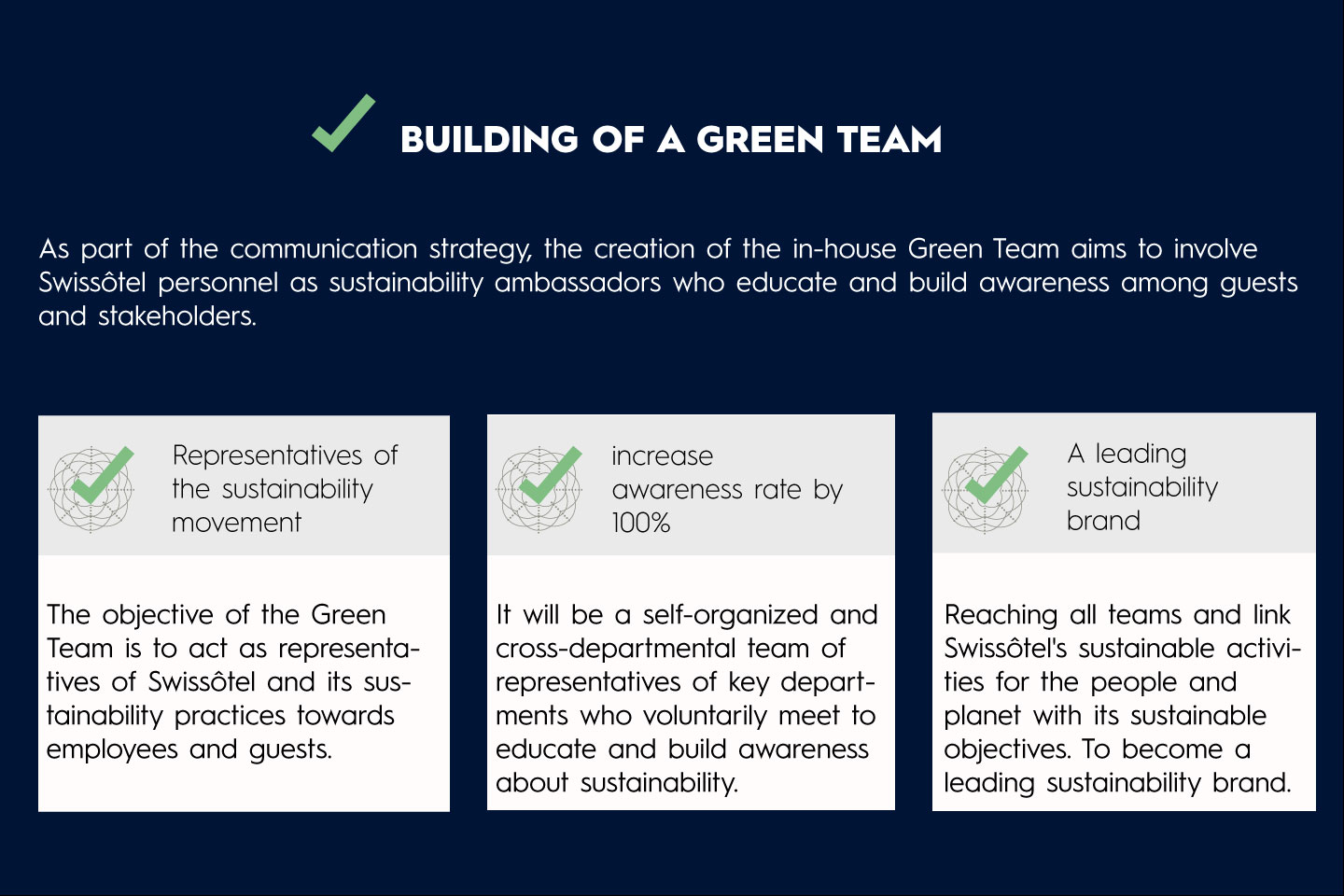
The four communication strategies focus on: communication basics, in-room communication, the creation of a Green Team, and the development of new mobile apps. The goal is to enhance sustainability awareness and boost brand visibility among different shareholders via an effective digital strategy.
Consumers are willing to pay a green premium, especially those within the Millennial and Gen Z generations, as long as it does not deteriorate the existing quality of the hotel. To increase guests’ willingness to pay, hotels should communicate their green practices effectively.
Conclusion
It is time for Swissôtel, and for the hospitality industry in general, to build a more responsible and sustainable business model. In brief, hotel owners need to become better citizens.
This report has developed concrete action plans for Swissôtel to demonstrate its sustainable initiatives, as well as various communication strategies to convey the sustainable messages to the public. There is an imperative need to reinvent how the hotel industry can better respect the people and planet pillars of sustainability despite the potentially expensive overheads.
In auditing the brand’s environmental impact, bettering workplace structures, and avoiding the greenwashing stigma, Swissôtel can showcase an authentic, transparent, and positive sustainable brand image. By implementing new action plans and promoting them through high-quality media content, Swissôtel can become a pioneer amongst their competitive set.